How Plunger Metering Pumps Deliver Controlled Fluid Volumes in Industrial Systems
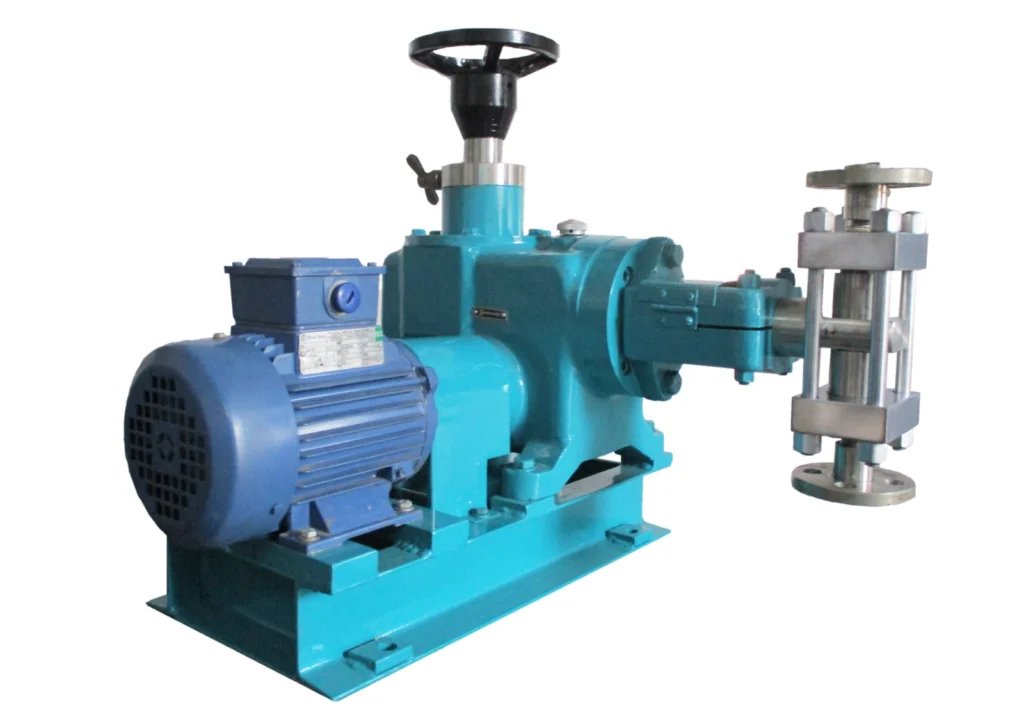
Industrial processes often require liquids to be delivered at a specific rate, pressure, and volume. Whether injecting treatment chemicals, transferring process fluids, or supporting specialised production operations, inconsistent dosing can affect efficiency and process stability. Plunger metering pumps are designed for applications where controlled liquid delivery is essential. Understanding their operating mechanism, application requirements, and compatibility with other process equipment helps engineers and buyers select suitable pumping solutions for demanding industrial environments.
How a Plunger Metering Pump Controls Liquid Delivery
A plunger metering pump uses the reciprocating movement of a plunger to draw liquid into a pumping chamber and discharge it through the outlet. During the suction stroke, the plunger retracts, allowing liquid to enter the chamber through the inlet valve. During the discharge stroke, the plunger moves forward, pressurising the liquid and forcing it towards the outlet.
The volume delivered during each stroke depends on factors such as plunger dimensions, stroke length, operating frequency, and the characteristics of the liquid. Adjusting the stroke or pump speed, where the design permits, allows the delivery rate to be regulated according to process requirements.
Unlike conventional transfer pumps that primarily move large quantities of fluid, metering pumps are selected when predictable delivery is important. Their suitability depends on the required flow range, pressure, fluid properties, and the accuracy needed for the application.
What Influences Pumping Performance?
Several operating factors determine whether a pump can deliver the required volume consistently.
- Fluid viscosity: Thicker liquids may influence suction performance and increase resistance within the system.
- Operating pressure: The pump must be designed for the required discharge pressure and associated process conditions.
- Stroke settings: Incorrect adjustment can result in delivery rates that do not match the intended dosing requirement.
- Valve condition: Worn, obstructed, or unsuitable check valves can affect volumetric performance.
- Installation quality: Poor suction arrangements, trapped gas, or unsuitable piping can interfere with reliable operation.
Evaluating these factors before installation helps prevent performance problems and reduces the likelihood of repeated adjustments after commissioning.
Where Plunger Metering Pumps Are Used
Controlled liquid delivery is important in several industrial sectors, including oil and gas processing, water treatment, chemical manufacturing, and specialised production facilities.
In oil and gas operations, metering pumps may be used to inject corrosion inhibitors, scale inhibitors, demulsifiers, and other treatment chemicals. The required dosing rate depends on the process conditions and the treatment programme established by the operator.
In water treatment, metering pumps can deliver chemicals needed for disinfection, pH adjustment, or other treatment stages. Chemical manufacturing facilities may use them to introduce measured quantities of additives or reactants into a production process.
The correct pump configuration depends on the chemical being handled, its compatibility with wetted materials, the required pressure, and the operating environment. Buyers should also consider seal arrangements, maintenance access, and the availability of suitable replacement parts.
Knock Out Drums: The First Line of Defence Against Carryover
Understanding liquid metering equipment is only one part of maintaining stable industrial operations. Gas processing systems also require equipment that separates unwanted liquid droplets from gas streams before they reach downstream machinery.
For a closer look at this essential separation equipment, read Knock Out Drums: The First Line of Defence Against Carryover. The article explains how knock out drums help remove entrained liquids from gas streams, why liquid carryover matters, and how separation supports the protection of downstream process equipment.
This topic is particularly relevant to facilities where gas streams may contain condensed hydrocarbons, water, or other liquid components. If these liquids travel into compressors or other equipment designed primarily for gas service, they can contribute to operational disturbances, mechanical damage, and increased maintenance requirements.
Understanding the role of separation equipment alongside pumping and chemical injection systems gives process teams a broader view of how individual components contribute to plant reliability.
How a Knock Out Drum Protects Downstream Equipment
A knock out drum is a vessel designed to separate liquid from a gas stream. As the incoming mixture enters the vessel, its velocity and flow pattern change, allowing larger liquid droplets to separate under gravity. Depending on the design, inlet devices and mist eliminators may improve the removal of liquid droplets before the gas leaves the vessel.
Separated liquid collects at the bottom and is removed through a suitable drainage or liquid-level control arrangement. The gas exits through the designated outlet and continues towards the next stage of processing.
Several design considerations influence performance:
- Gas flow rate: The vessel must accommodate expected operating and peak flow conditions.
- Liquid loading: The design should account for the quantity of liquid entering with the gas.
- Droplet size: Fine droplets may require additional separation features.
- Operating pressure: Vessel design and associated components must meet the specified pressure requirements.
- Liquid-level control: Suitable instrumentation and drainage arrangements help prevent accumulated liquid from entering the gas outlet.
A knock out drum does not automatically remove every droplet under all conditions. Its performance depends on the design, operating envelope, inlet conditions, and the characteristics of the gas-liquid mixture.
Coordinating Pumping and Separation Requirements
Although metering pumps and knock out drums perform different functions, both contribute to reliable process operation. Pumps regulate liquid delivery, while separation vessels help manage unwanted liquid within gas streams.
Engineers should evaluate each component within the wider process design rather than selecting equipment solely on individual specifications. Chemical injection requirements may depend on process pressure, fluid composition, and treatment objectives, while separation equipment must accommodate expected gas flow and liquid loading.
Routine inspection also matters. Pump valves, plungers, seals, and injection lines require maintenance appropriate to their service conditions. Separation vessels need suitable inspection, level-control checks, and verification of associated instrumentation.
When equipment selection, installation, and maintenance are coordinated, operators can better manage process stability and reduce avoidable interruptions.
Conclusion
Reliable industrial fluid handling depends on selecting equipment that matches the process requirements and maintaining it throughout its operating life. Plunger metering pumps support controlled liquid delivery, while separation vessels help protect downstream systems from liquid carryover. Understanding their operating principles and limitations allows buyers to make more informed technical decisions. NND Oil & Gas supports the wider industrial equipment sector by serving the needs of demanding oil and gas applications.

Comments
Post a Comment